
War by Proxy

I was recently contacted by a reader via direct message and asked about proxy wars, what they are and how they tie into modern international relations, especially as we seem to be increasingly returning to inter-state war. In considering the question, I believed it would be useful to answer it in this week’s article as it is a term that is often thrown around when discussing any conflict that has a modicum of external support to one of the belligerents. As the war in Iran continues to escalate and more powers are drawn into it, particularly with Russia providing Iran targeting information on US forces and European states rushing to defend Cyprus, it is useful to understand when wars are direct versus when they are fought by proxy.
Definition & Core Characteristics
A proxy war is an armed conflict where external powers support opposing local actors instead of fighting each other directly. Rather than deploying their own militaries to the conflict in open battle, states or non-state actors provide funding, weapons, intelligence, training, or logistical support to their allies which then fight on their behalf. Depending on the conflict, the opposing external powers may be in direct competition with each other and are using this smaller conflict to advance that conflict. Other times, proxy wars become such as allied states seek to defend and bolster the actors in conflict but do not want to get involved in a war with other, hostile forces.
Somewhat paradoxically two of the most recognised examples of proxy wars, the Korean and Vietnam Wars, are characterised by the direct military intervention by external powers on one side (the United States and its allies), although by the time their militaries were “boots on the ground” the conflict had evolved away from a proxy war. Therefore, proxy wars are often attributed to the early stages of a much larger conflict or, as in the case of the Syrian Civil War, a continued level of external support which leads to a low intensity conflict which lasts for months or even years. Proxy warfare most commonly results from competition over a strategic goal: influence, resources, ideological competition, or regional hegemony. Rivals are thus able to pursue these goals with a lowered risk to political, economic, and military factors that a direct, interstate war would bring.
Political Scientists have studied proxy wars for as long as the discipline has existed as they are among the most common forms of conflict, although they increased in occurrence after the end of World War II and the beginning of decolonisation. As new independent states emerged during the Cold War, both the Soviet Union and United States of America vied for ideological influence among these states while European powers, reluctant to lose access to critical resources, also engaged in targeted support to maintain control and influence among new nations.
There are several defining features of proxy wars which designate them as such instead of conventional intra or interstate war. The first and most noticeable is the presence of one or more external sponsors, generally with opposing goals, who provide support to local armed groups or governments. As mentioned, this support can take several different forms depending on the importance of the conflict to the external power, the level of political flexibility they have in sustaining that support, and the inherent capabilities of the groups they are supporting.
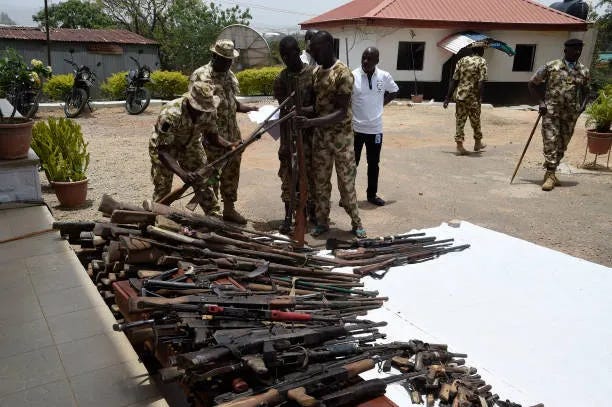
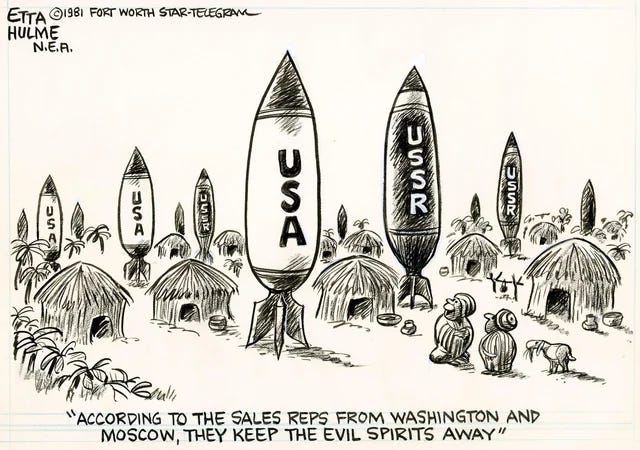
The second key characteristic of a proxy war is that it is the indigenous actors who are doing the actual fighting, whether they be militia forces, insurgents, rebel movements, or state militaries. The external sponsors do not typically get directly involved in combat as this would increase the risk of opposing sponsors to do the same and the proxy war becomes a direct war between powers instead. The African proxy wars of the Cold War exemplify this characteristic. This is a central attribute of the conflict as rival sponsors will seek to avoid direct confrontation with one another, using local agents armed or informed by them to fulfil their long-term strategic objectives.
True proxy conflicts are defined most clearly by the shrouding of external support that is only revealed as the war continues or is ultimately concluded. In certain conflicts, sponsors are able to obscure their involvement by relying on intelligence and clandestine services which train, equip, and direct forces within the conflict environment. Other conflicts are more open, with external states providing military advisors, weapon systems, or other forms of economic and/or humanitarian assistance. Of utmost importance in a proxy war is that the local actors will bear the greatest human and material costs, creating an asymmetry in how states view relative casualties, strategic gains or losses, and the economic costs of supporting actors in the proxy conflict. As we will see in the next sections, proxy wars have historically been common when a direct war between major powers comes with the risk of catastrophic escalation. This is a grave concern for conflict involving nuclear-armed states or regional hegemons who may drag many allies and surrounding states into a conflict, increasing the economic and political costs.
Why States Use Proxy Warfare
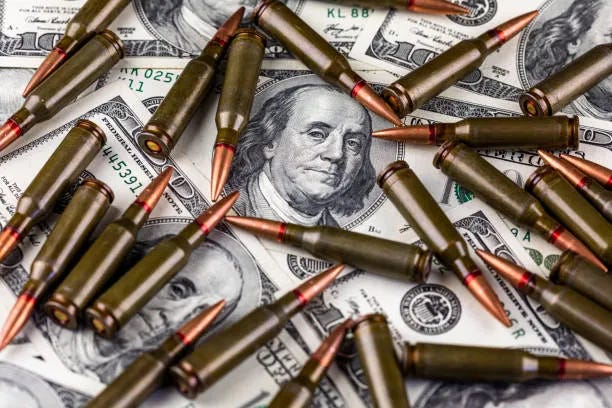
States adopt proxy strategies for several strategic reasons, the most useful being an ability to engage adversaries in competition for resources, influence, or regional control without triggering a full-scale war. The second reason is driven by cost effectiveness; it is much cheaper to support local partners with targeted military and logistical aid than deploying large expeditionary forces. To that end, governments who engage in proxy warfare are often able to generate political cover for themselves by relying on plausible deniability, especially in the proxy wars of the Twentieth Century where news media reporting was less widespread and diffused as today. Even if their involvement is known, proxy wars enable states to maintain alliances and regional influence, along with the economic and strategic benefits of the relationship, without suffering the high costs associated with traditional warfare such as casualties, war rationales, or military expenses. Indeed, one of the main motivations for external states to get involved in proxy wars is the valuable prize of being able to shape political, economic, and strategic outcomes of the target state, providing their chosen side win.
In strategic theory, which often intersects civil-military relations and international relations scholarship, proxy warfare is often described as a tool of state power projection. This means that states can achieve their long-term strategic goals through supporting an actor in a conflict rather than risking direct confrontation with an opposing influencing state. However, proxy wars are not safe from escalation, especially if external sponsors are committed to achieving their outcome to the extent that they will increase support to achieve this. This is particularly dangerous among the great power states, China, the US, Russia, the EU (if it acted as a bloc), as these states may feel pressured to escalate the conflict or risk looking weak, damaging relations with allies or other regional hegemons. A second aspect of unintended escalation comes from the unlimited provision of weapons to sub-state actors. The diffusion of weapons and novel technologies such as missile launchers or drones through a proxy conflict can often result in unexpected groups gaining possession of such weapons. The most notable example of this is the CIA’s arming of Afghanistan’s resistance groups with surface-to-air Stinger Missiles in the 1980s when the Soviet Union was at war with the state. After the war was over and the Taliban took power, Afghani warlords either traded or sold the munitions on the black market, resulting in Stingers ending up in the hands of al-Qaeda, Hezbollah, and various separatist movements in Chechnya, Kashmir, and the Philippines.
Examples of Proxy Wars
The Korean War (1950–1953) is often considered by political scientists as the first early Cold War proxy conflict, it ended in an armistice that continues to this day. North Korea was supported by the Soviet Union and China while South Korea was backed by a UN coalition of forces led by the United States. After WWII, Korea was divided in two by the US and Soviet Union as it had been a Japanese colony for 35 years, the boundary being known as the 38th parallel. It was expected that an independent state would be formed from North and South, however disagreements arose between the two zones in 1948, leading to the formation of two separate governments although both claimed they were leading a unified Korea. In 1950, the Korean People's Army (KPA), trained and equipped by the Soviet Union launched an invasion of the south. The relatively new United Nations Security Council denounced the attack and urged member states to repel the invasion, drawing on 21 countries to support the mission. Despite this, the US provided the lion's share of military personnel, who were deployed to push back the north's invasion. By September of 1950, US and UN forces had retaken Seoul, driven back the KPA, and captured Pyongyang before advancing towards the border with China. This prompted China to enter the war on the side of North Korea and led to a sustained conflict between China and the US-UN allied forces.
Negotiations to end the war began in the summer of 1951 but were slow given the scale of fighting and the use of UN aerial bombardment of the North. Combat ended formally on 27th July 1953 with the signing of the armistice which still holds both sides to a truce. The conflict was incredibly violent with at least one million military deaths and between 1.5 and 3 million civilians killed, not counting casualties. While direct conflict occurred between China and the US, the conflict is still considered a prime example of a proxy war as the war aims for supporting nations were ideological control of the region in a manner that sharply defined the remainder of the Cold War. The US sought to contain communism and defend democracies whereas the Soviets aimed to expand communism, and China intervened out of fear of US advance towards its borders. The Korean War would also serve as a bloody blueprint of the Vietnam War, another key proxy war that has defined the world.
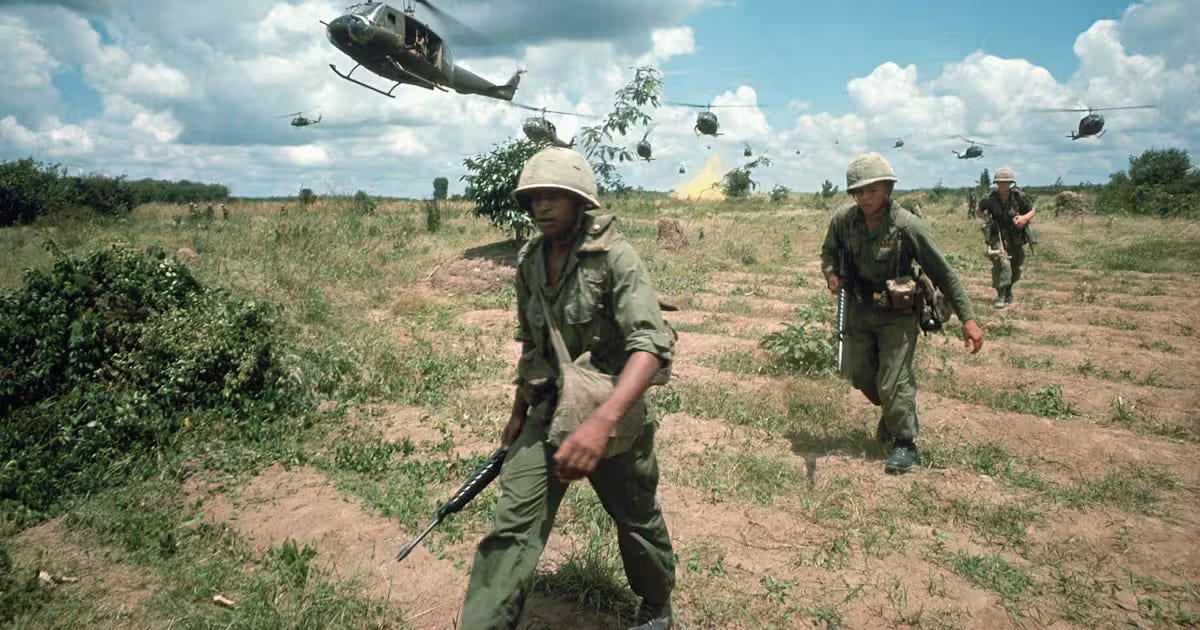
Similar to the Korean War, the Vietnam War (1955-1975) was triggered by an externally imposed border across the territory, although the circumstances of the initial settlement are much more complex. The war itself can be characterised as a postcolonial war of national liberation which drew proxy support from both superpowers in the Cold War, eventually leading to American troops on the ground in 1965. The Soviet Union supplied North Vietnam with substantial material support in the form of medical supplies, tanks, planes, small arms, artillery, and anti-aircraft weapons. In addition, Soviet military personnel were stationed in Vietnam and operated some surface-to-air missiles against US forces, along with signals intelligence support. Likewise, China provided military support personnel and cash to support the North Vietnamese efforts. As in Korea, direct confrontation between the nuclear armed superpowers was rare, but the participation of US troops changes elements of the proxy war categorisation for the Vietnam War.
Among the many reasons for direct US involvement was the desire to contain communism and prevent the Domino Theory whereby states neighbouring those which had shifted to communism were much more likely to follow suit, adopting this ideology and becoming hostile to the US and Western states. Ultimately the US lost the Vietnam War, resulting in a major victory for China and the Soviet Union, North Vietnam successfully unified the country under communist rule, and had devastating effects on US foreign policy for decades to come. Critically, it also changed the appetite for overt intervention into proxy conflicts among the US political and military leadership. Consequently, proxy war support was largely handed over to clandestine intelligence agencies and targeted strikes to neutralise problematic leaders, leading to multiple regime changes by the US among states most notably in South America during the rest of the Cold War and 1990s.
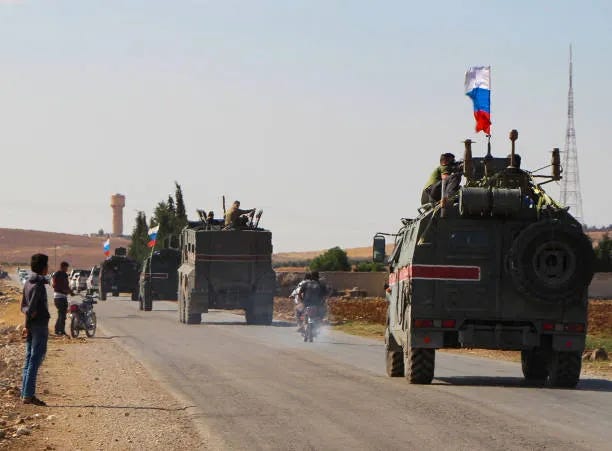
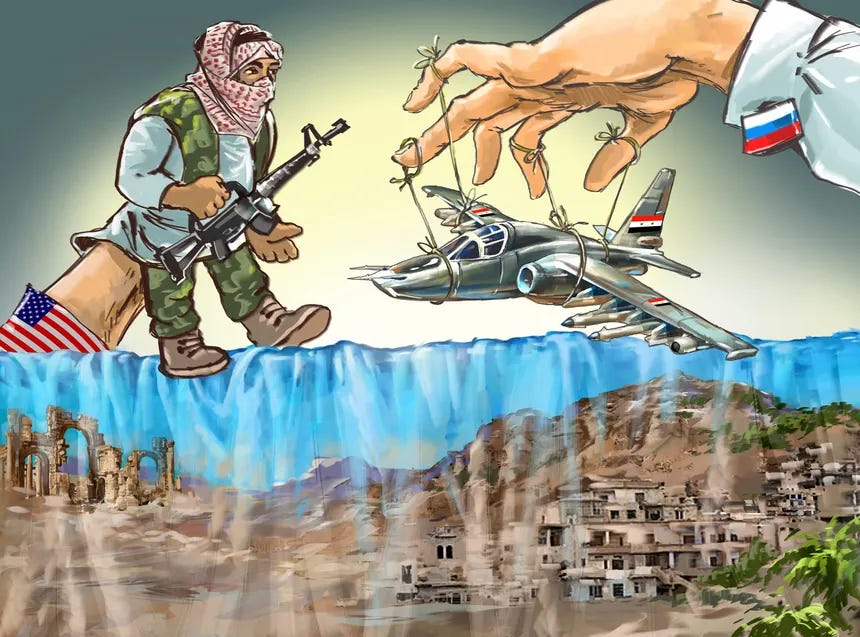
Moving onto a contemporary example, we can see the same pattern of strategic interests and external support in the Syrian Civil War (2011-2024) as it involved multiple regional and global actors seeking to support their regional ally or improve the chances of democratic regime change. The al-Assad government was extensively backed by Russia and Iran while various opposition groups were supported by the US, Turkey, and the Gulf states. I plan on doing a series in the future on the Arab Spring wave of democratisation and the Syrian Civil War. In brief, the Syrian Civil War was triggered when protests against the ruling party were violently repressed, triggering the emergence of armed opposition groups and a civil uprising where the al-Assad regime lost control of vast swaths of the state. The resulting civil war drew in allies of the regime, Russia and Iran, while opposing forces gradually formed into the Free Syrian Army, trained and equipped by the US, Qatar, and Turkey. Iran provided support through its regional proxies, most notably with Hezbollah, while Russia intervened directly through targeted strikes and military operations against Syrian opposition forces, positioning strike aircraft within Syria itself.
The Syrian Civil War was complicated by the emergence of ISIS and an international coalition arrived to contain and destroy the dangerous terrorist group, often acting inside Syria, but rarely becoming directly involved with the civil war components. This meant that the US were arming and training Kurdish paramilitary forces, a development that made Turkey nervous enough to invade northern Syria in 2016 in an attempt to blunt the Kurdish forces should they turn their attention to Turkey. In 2016, an alliance of Islamic rebel groups formed into Hay’at Tahrir al-Sham (HTS) which would ultimately spearhead the downfall of the al-Assad regime in 2024. After the war, HTS merged into the official Syrian Armed Forces. During the war, the US and most Western states considered HTS to be a terrorist organisation given their ties to various hostile jihadist factions and their leader’s previous ties to al-Qaeda. The war ended when al-Assad fled the country and HTS secured Damascus for the rebels.
The Syrian Civil War is a good case study for modern proxy conflicts because it shows how such wars involve multiple external sponsors with varying motivations and support levels. It also demonstrates how local actors can become fragmented the longer a conflict continues, the effects of ideological cleavages on actors, and how such conflicts can evolve into highly complex war systems. We witnessed in this conflict the enduring competition between the US and Russia, inherited from the Cold War and spiralling to include Ukraine and now Iran. Beyond global hegemons, the Syrian Civil War also showcased a steep divide between regional powers with Iran and Saudi Arabia intervening based on religious superiority motivations, while Turkey clashed with autonomous Kurdish groups in north-eastern Syria, seeing a threat in their formation despite extensive US support for the Kurds.
Conclusion
Proxy wars remain a central feature of modern geopolitics, particularly in regions where the great powers compete indirectly. Examples frequently cited in current scholarship include conflicts in Yemen, Libya, and parts of the Sahel. Modern proxy warfare maintains all of the classical characterisations, along with evolutions along technological enablement where drones and cyber capabilities can make up for asymmetries in local actors’ capabilities. We can also see that modern proxy wars are characterised by multi-layered sponsorship with several states supporting overlapping factions, sometimes violating an ally’s strategic priorities and creating fragmentation. Together, these developments are increasingly blurring the boundaries between civil wars, interstate wars, and proxy conflicts.
Yes very interesting, raises the question when is a war not a war.
Very informative Isaac thankyou